Porcelain paving cleaning: how to keep patios looking new
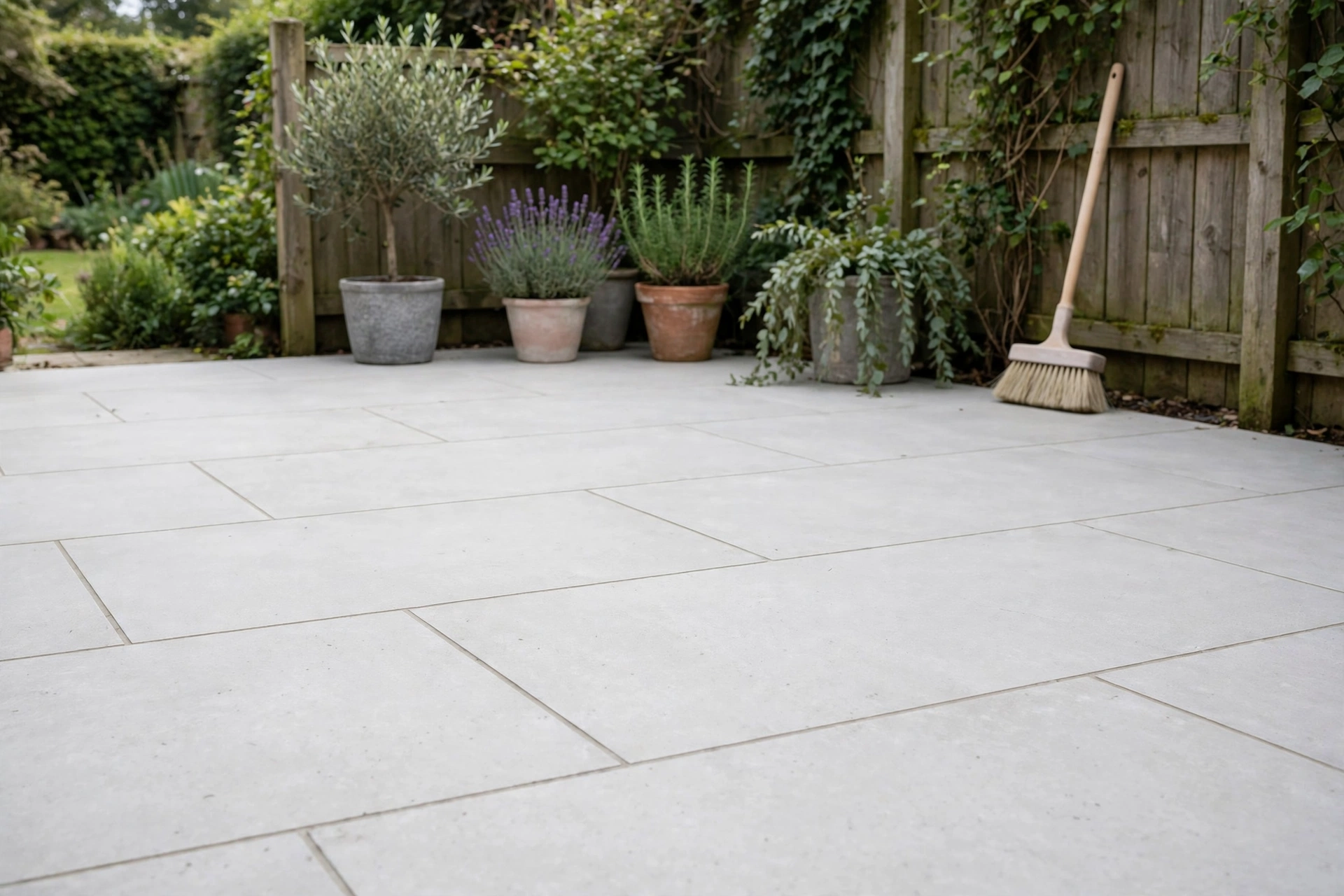
Porcelain paving is chosen for its looks — the clean lines, the even colour, the way a patio looks finished the day it is laid. What surprises many owners is how little work it takes to keep it looking that way, and how much of that work is simply doing the small things regularly, before dirt has a chance to settle in.
A porcelain patio does not need a complicated cleaning routine, and it does not need strong treatment to stay looking new. What it needs is the same kind of care as anything else in the garden: a regular sweep, leaves dealt with before they rot down, and marks cleaned while they are fresh rather than left to set. This guide covers what to do, how often, and what to avoid — so the patio still looks like the day it was laid.
It builds on our introduction to the material in porcelain paving in the North West: what to know, and on the comparison in porcelain paving vs natural stone: which suits you?. If you are still choosing a patio material, those two guides will help you decide. This one is for the patio you already have.
Why porcelain stays looking new — and what makes it look tired
Porcelain paving is a dense, hard-fired material, and that density is the reason it keeps its looks. Water and dirt do not soak into it the way they soak into some natural stone, so marks tend to sit on the surface rather than sink in, and the colour does not fade in the sun the way some other materials can. A porcelain patio that is looked after should still look close to new after years of use — the surface itself is doing most of the work.
What makes a porcelain patio look tired is almost never the paving itself. It is what is left sitting on it. Leaves left through autumn stain as they rot down. Mud carried in from the lawn dries into a film. A spill from a barbecue, a plant pot left in the same place all winter, or bird droppings left for weeks — each of these is easy to deal with on the day, and each of them becomes a job if it is left. The rule for porcelain is simple: clean little and often, and never let dirt settle in for a season.
The joints matter too. A patio is not just the slabs; it is the joints between them, and the edging around them. Weeds and moss do not grow through a porcelain slab, but they can appear in a joint that has collected soil and leaves, and once they are established they are harder to remove. Keeping the joints clear is part of keeping the patio looking new, and it is easier than clearing them out later.
The regular routine: a sweep and a wash
Most of the care a porcelain patio needs takes a few minutes, and it is worth doing it regularly rather than saving it up for a big clean.
Start with a sweep. A stiff brush and a few minutes, once a week in the months when the garden is being used, will clear leaves, dust and the fine grit that gets walked across the patio. That grit matters more than it looks: walked across the surface day after day, it is what dulls the finish over time. Sweeping it away is the single most useful thing you can do for a porcelain patio, and it costs nothing.
For a wash, plain water and a soft brush are enough for most of the year. Wet the patio, brush it gently, and rinse it off. That will shift the everyday film of dust and pollen, and it will keep the colour looking as it should. Do it on a dry day, so the patio dries quickly and you can see what is left — a wet patio hides marks that show up again once it is dry.
How often depends on the garden. A patio under trees, or next to a lawn that is used every day, will need a sweep more often than a patio in an open, sunny spot. A patio that is used for eating outside in summer will need a wash after the season, when the spills and the foot traffic have had their say. There is no fixed schedule that suits every garden — look at the patio, and clean it when it needs it, rather than waiting for a date on the calendar.
Leaves, marks and the things to deal with straight away
Some things should not wait for the weekly sweep. Leaves are the first of them. In autumn, leaves that sit on a patio for days will stain it as they rot, and the stain is harder to remove than the leaf was. Clear leaves as they fall, or at least every few days while the trees are shedding, and the patio will stay clean underneath them. The same goes for anything that drops from a plant pot, or from a bird feeder above the patio — clear it while it is fresh.
Spills are the second. Food, drink and anything from a barbecue should be cleaned up the same day, with plain water and a soft brush. Left overnight they are usually still easy to shift; left for a week, they are a job. The same is true of mud from shoes and paws — a quick rinse while it is wet is a minute's work, while dried mud ground into the surface takes far longer.
Plant pots deserve a thought of their own. A pot that sits in the same place all year will leave a ring underneath it, where water and soil have collected. Move pots around now and then, and lift them to sweep underneath, so no one patch of the patio is left damp and dirty while the rest is clean. It is a small habit, and it is the difference between a patio that looks evenly cared for and one with a pale circle where every pot has stood.
If a mark will not shift with water and a soft brush, do not reach for something stronger straight away. Stop, and ask the installer who laid the patio what is safe to use on it. Porcelain is tough, but the joints and the edging around it are not always as tough, and a treatment that is safe for the slab may not be safe for everything around it. The installer knows what was used on your patio, and what will not damage it. A quick question is worth far more than a guess.
What not to do
Porcelain paving is forgiving, but there are a few things that will damage it, or the patio around it, and they are worth knowing about before they happen.
Do not use harsh chemicals on the patio. The temptation, when a mark will not shift, is to reach for the strongest thing in the cupboard — but strong treatments can damage the joints, mark the edging, and leave a residue that attracts more dirt afterwards. If water and a soft brush will not shift a mark, the answer is a question to the installer, not a stronger chemical.
Do not use a wire brush, or anything with a hard metal edge, on the surface. A soft brush is enough, and a hard one will scratch the finish — and a scratch on porcelain is there for good. The same goes for scraping at a mark with a metal tool. If something is stuck to the surface, soften it with water first, and brush it away gently.
Be careful with pressure washers. A pressure washer held too close, or on too strong a setting, can damage the joints between the slabs and wash out the material that holds them in place. It can also drive dirt into the joints rather than washing it away. If you use one, keep it at a distance, keep it moving, and never aim it straight at a joint. For most porcelain patios, a brush and a hose are enough, and they carry none of the risk.
And do not leave the patio damp and covered. A tarpaulin, a pile of leaves or a stack of plant pots left over a patio through winter will trap damp underneath, and the damp will leave its mark. Keep the patio clear through the wet months, so air can get to it and it can dry between showers.
Through the year: a simple rhythm
A porcelain patio does not need a different routine for every season, but the garden changes through the year, and the care should change with it.
In spring, give the patio a proper wash after winter — a sweep, a wash with plain water and a soft brush, and a check of the joints and the edging. Clear out anything that has collected in the joints over winter, and look at the edging to see whether it is still firm and tidy. Spring is also the time to move plant pots and check underneath them, before the growing season starts.
In summer, the patio is being used, so the routine is a regular sweep and a wash when it needs it — after a barbecue, after a spell of dry weather has left dust on the surface, or when the garden has been busy. Deal with spills the same day, and keep an eye on anything that drops from trees or feeders above the patio.
In autumn, the work is leaves. Clear them regularly, and do not let them sit and rot on the surface. A sweep every few days while the trees are shedding will keep the patio clean underneath, and it is far less work than cleaning the stains they leave behind.
In winter, keep the patio clear and let it dry between showers. Do not leave anything sitting on it for weeks at a time, and clear leaves and debris before they are trapped under frost. If the patio ices over, let it thaw naturally rather than scraping at it — a scraper will do more damage to the surface than the ice will.
That rhythm — a sweep, a wash, and dealing with things while they are fresh — is all a porcelain patio needs. It is the same simple care we recommend for keeping a resin driveway looking new, which we covered in how to keep a resin driveway looking new: regular attention, nothing harsh, and nothing left to settle in.
When to ask for help
Most porcelain patio care is straightforward, and most owners can do it themselves with a brush and a hose. There are a few times when it is worth asking the installer, or a professional, instead of carrying on alone.
Ask if a mark will not shift with water and a soft brush, and you do not know what is safe to use on it. Ask if a joint has opened up, or an edge has moved, so it can be dealt with before it gets worse. Ask if the patio has been stained by something you cannot identify, or if a large area has changed colour and you do not know why. And ask before you use any treatment on the patio that was not recommended when it was laid — a quick question costs nothing, and it is the safest way to keep a patio looking new.
A porcelain patio is one of the easiest surfaces in the garden to look after, and that is a large part of why people choose it. A little regular care — a sweep, a wash, and nothing left to settle in — will keep it looking the way it did on the day it was laid, for a long time to come.
If you are thinking about a porcelain patio, or you have one and want advice on looking after it, the next step is a survey. We will come and look at the garden, talk through what would suit it, and give you a free fixed written quote — no obligation, and no prices guessed over the phone. Find out more at everlastinglawns.co.uk.