Porcelain paving vs natural stone: which suits you?
Porcelain and natural stone are the two materials most people choose between for a patio in the North West — and they look and behave quite differently once they are down. Neither is the right answer for every garden. The right one is the one that suits how you use the patio, how much upkeep you are willing to do, and the look of the house and garden around it.
Here is an honest comparison, so you can choose with your eyes open.
How they look
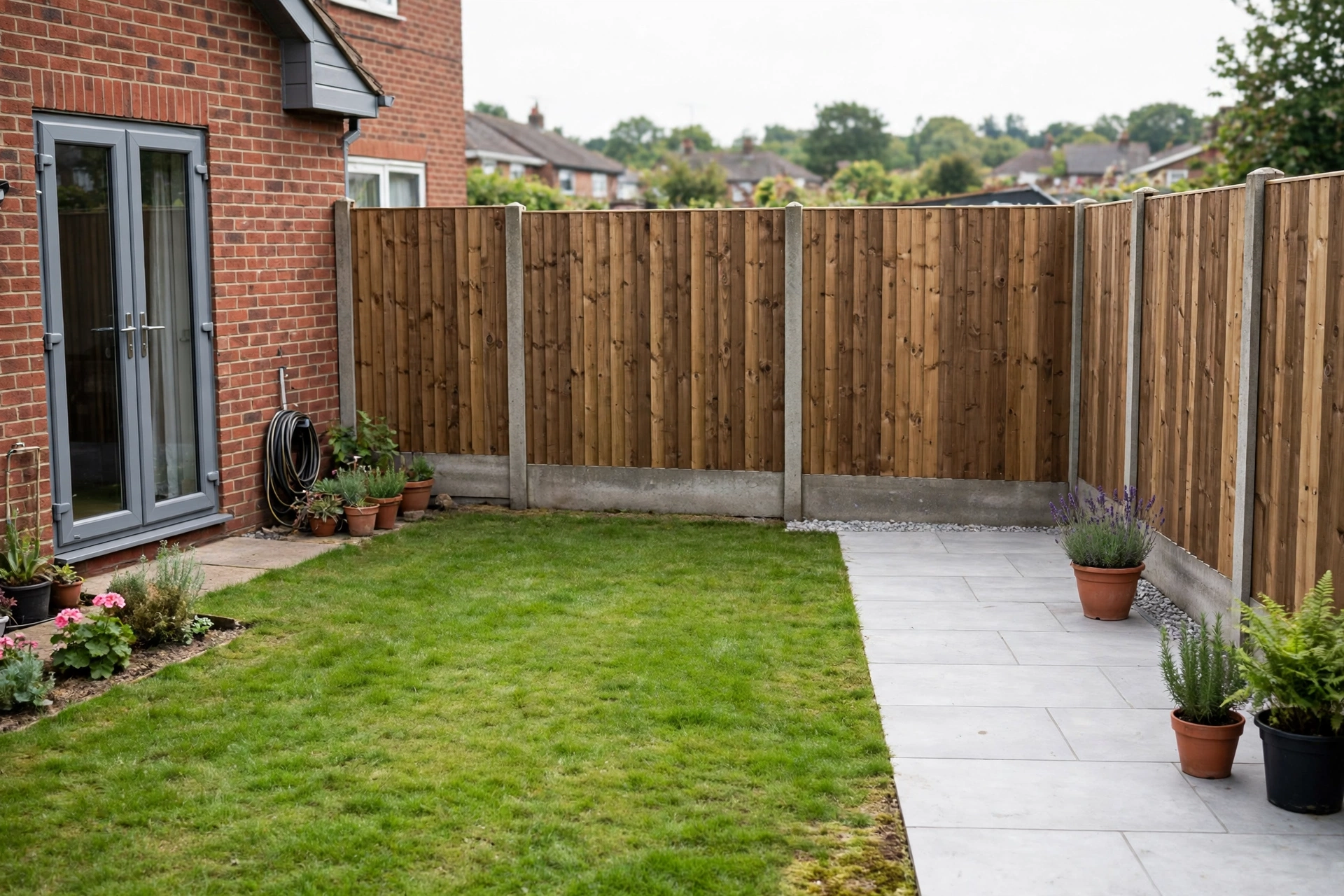
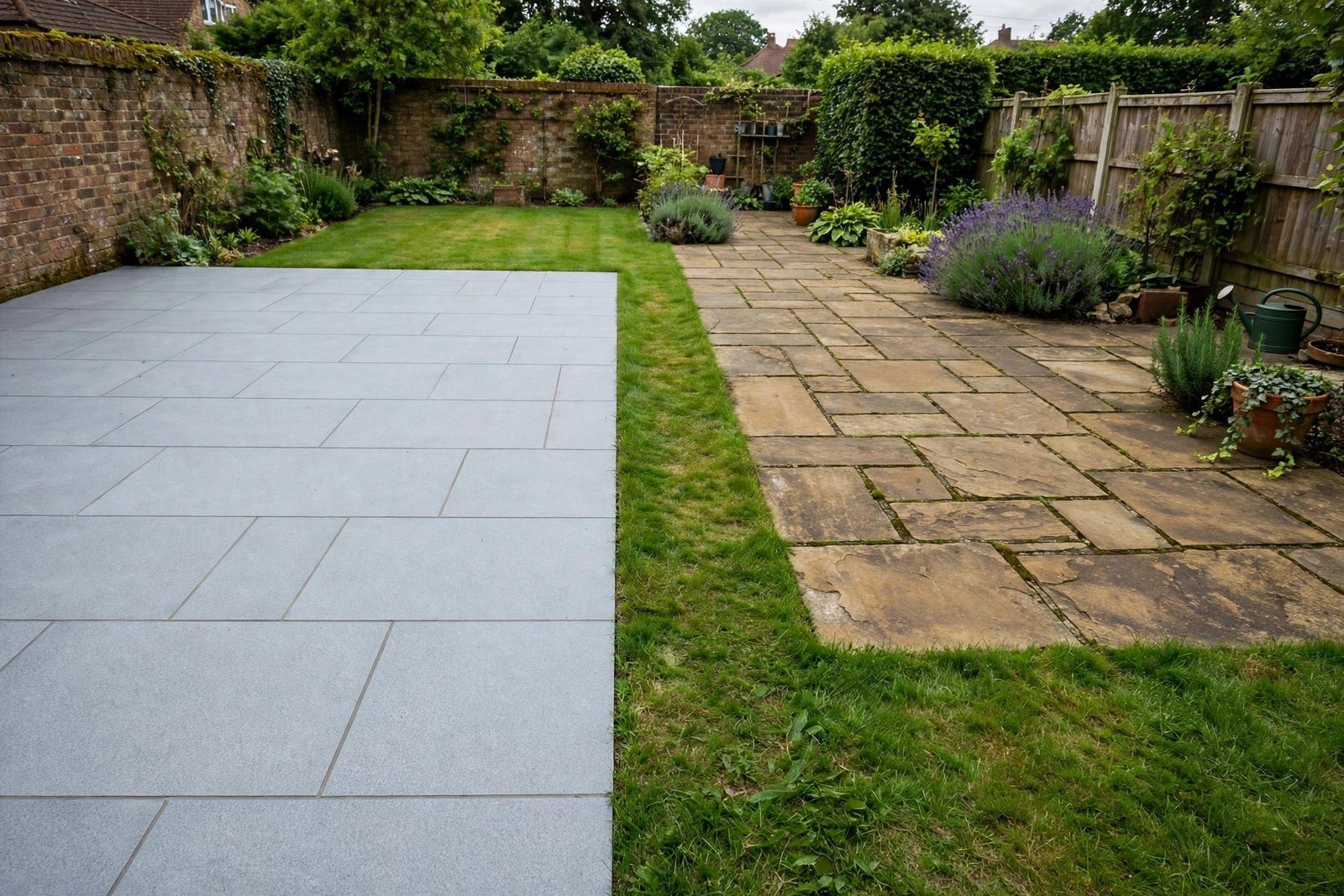
Porcelain paving is made, not quarried. Each slab is manufactured to a consistent size, thickness and colour, so a porcelain patio looks neat, even and modern — clean lines, tight joints, and a uniform finish across the whole area. It comes in a wide range of colours and finishes, from pale greys that suit a modern house to warmer tones and stone-effect finishes that imitate natural stone at a glance. That is the look we covered in our guide to porcelain paving in the North West: a tidy, contemporary patio that stays looking the same from one slab to the next.
Natural stone — sandstone, limestone, slate or granite — is the opposite. Every slab is different, with its own colour variation, veining and texture, because it was cut from rock rather than made in a factory. A natural stone patio looks softer and less uniform, and it changes with the light and the weather: wet stone darkens and shows its colours more strongly, dry stone looks paler. For an older house, a cottage garden, or a garden where you want the patio to look as if it has always been there, that variation is the whole point.
There is no better look in itself. A crisp porcelain patio can look out of place against a stone cottage, and a rustic stone patio can look untidy against a sharp modern extension. Start with the house, and with the garden the patio sits in, and choose the material that belongs there.
Upkeep: what each one asks of you
This is where the two materials differ most in daily life.
Porcelain is very low maintenance. Its surface is dense and barely absorbs water, so it does not stain easily, does not encourage moss and algae in the way a more porous surface can, and is easy to clean — usually a brush and water is enough for everyday dirt. Because the colour runs through the slab rather than sitting on the surface, it does not fade in the sun, and it does not need sealing to keep its colour.
Natural stone asks for more. Most natural stone is porous to some degree, so it absorbs water, and with it dirt, leaves and algae — which is why a stone patio in a shady, damp corner of a North West garden can go green over winter. It usually needs sealing when it is laid, and resealing from time to time, to keep it looking its best and to make cleaning easier. Cleaning is still straightforward — a brush, water, and a suitable cleaner for the stone — but it is a job you will do more often than with porcelain, and you need to use products that suit the stone, not a harsh cleaner that could mark it.
If you want a patio you can largely forget about between cleans, porcelain has the easier life. If you are happy to look after it, and you value the way stone weathers and changes, natural stone repays the effort.
Frost, slip and the North West weather
Both materials are used outdoors in the North West, so both need to cope with frost, rain and the long damp winters — but they cope in different ways.
Porcelain is frost resistant because it absorbs so little water: there is very little water inside the slab to freeze and expand. That is one of the reasons it has become popular here. On slip, the finish matters more than the material: a polished porcelain slab can be slippery when wet, so for an outdoor patio, ask for a textured or grip finish, not a polished indoor one. The finish should be chosen for outside, not just for how it looks in a showroom.
Natural stone varies by type. Some stones, like granite, are dense and hard-wearing; others, like some sandstones and limestones, are softer and more porous, and can be affected by repeated frost if water gets in. A reputable supplier will tell you which stones suit outdoor use in this climate and which are better kept indoors. On slip, natural stone is usually textured by nature, which helps with grip — but a stone patio that has gone green with algae in a damp, shady spot will be slippery whatever it is made of, which is another reason to keep it clean.
In both cases, the surface you walk on is only as good as the base underneath it. A patio laid on a properly prepared sub-base, with the right falls so water drains away from the house, will last far better than the same slabs laid on a poor base — which is the same point we made about drainage in our guide to how long artificial grass lasts: the hidden work underneath decides how long the visible work lasts. Ask how the base will be prepared, and how water will drain, whatever material you choose.
Cost and what to check in a quote
We do not publish prices for either material, because the cost of a patio depends on the size, the ground it is laid on, the access to the garden, and the finish you choose — and a figure given without a visit would be a guess. What we do is visit, measure properly, and give a free fixed written quote after a site survey, so you know what you are agreeing to before any work starts. That is what to ask for from anyone: a visit, a proper measure, and a fixed written quote.
When you compare quotes, check that you are comparing the same thing. A quote should say which material and finish is included, how the base will be prepared, what edging will be used, and how the joints will be finished. A cheaper quote that leaves out the base preparation or the sealing is not cheaper — it is a different job. That is the same advice we gave in our comparison of resin driveway vs block paving vs tarmac: the surface you see is only as good as the work underneath it, and the quote should show that work.
Which suits you?
Choose porcelain if you want a neat, modern look, a uniform finish, and the lowest upkeep — a patio that looks the same in a year as it did on the day it was laid, and that you can clean with a brush and water. It suits modern houses, clean garden designs, and anyone who wants the patio to be the tidy frame for the rest of the garden.
Choose natural stone if you want character and variation, a softer look that ages and weathers, and a patio that suits an older house or a traditional garden. It asks for more upkeep — sealing, and cleaning more often, especially in shade — but for many gardens, that variation is exactly what makes it look right.
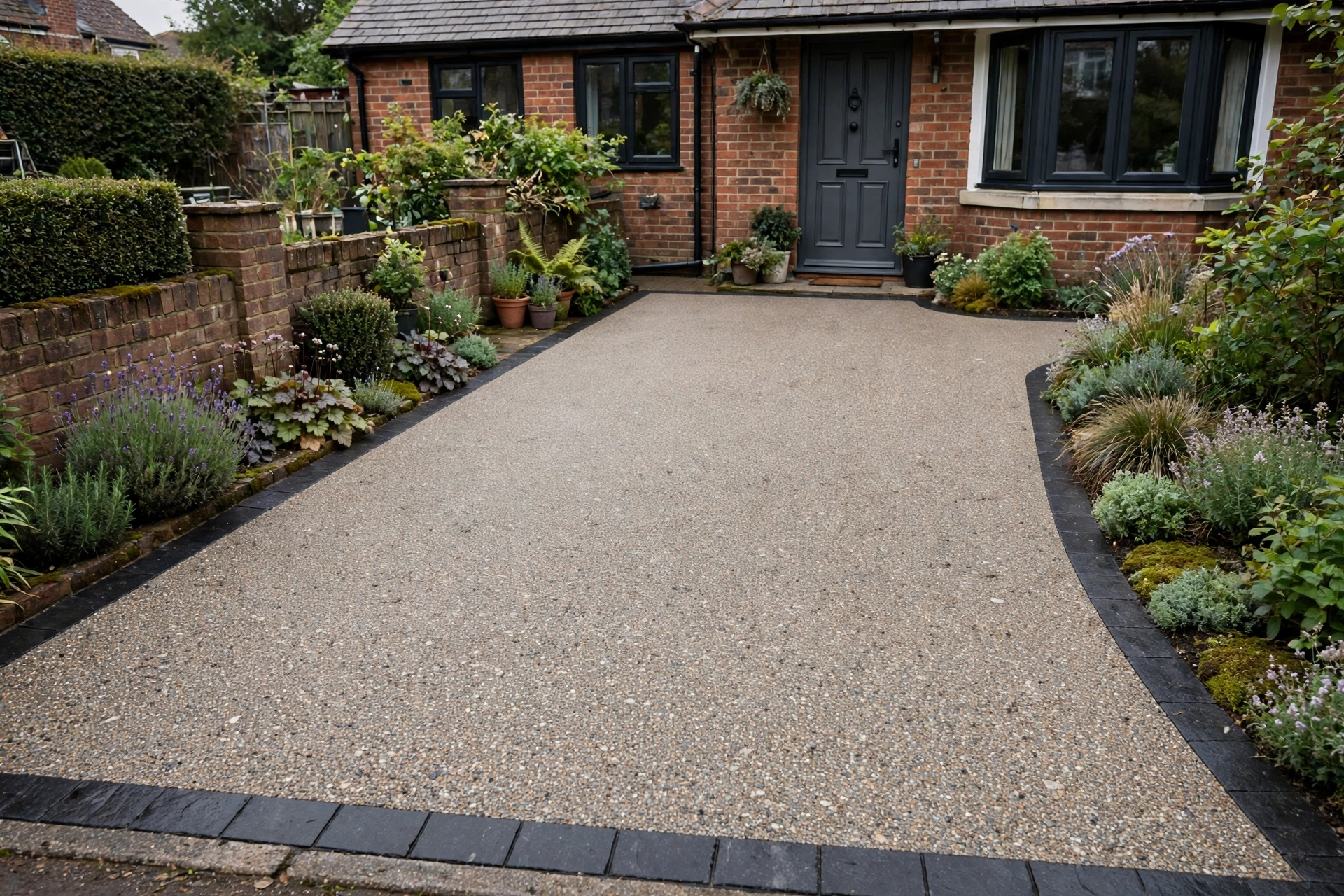
And there is a third option worth considering: using the two together. Porcelain for the main patio, with a natural stone border or step, or stone for a path and porcelain for the seating area, can give you the tidy finish where you sit and the character where it shows. That is the kind of combination we will cover in our front garden ideas — choosing the grass, the paving and the fencing together, so they work as one.
The honest answer
There is no best material. There is a best material for your house, your garden, and how much upkeep you are willing to do. Look at both in daylight, at full size, with the house behind them — not just a small sample in a showroom. Ask about the finish, the frost resistance, the slip, and the base. And get a fixed written quote after a proper visit, so you are comparing real jobs, not guesses.
If you are thinking about a new patio, the best next step is a visit. We visit, measure properly and give you a written fixed quote free of charge — and we will bring samples you can see against your own house, in your own light. Find us at everlastinglawns.co.uk.